|
Lawn Care
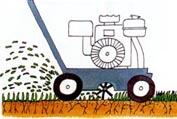 |
Thatch Removal Thatch consists of a dense mat of roots, stems and grass clipping,
which accumulate between the soil and growing turf layers. Excessive thatch creates a
barrier, preventing the absorption of water and nutrients, as well as limiting air flow to
the root system.
Allowing thatch to develop on an otherwise healthy lawn
reduces the effectiveness of pesticides and creates an ideal environment for insects and
turf diseases. |
| The periodic removal of thatch
with a Lawn Comber will greatly improve the health and appearance of the lawn. After
de-thatching, essential water, oxygen and nutrients reach the grass roots. |
| Lawn Aeration 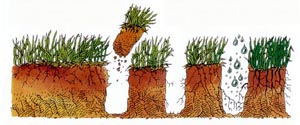 Lawns often
suffer from both compacted soil and thatch build-up. Compaction can be particularly
serious in the top two inches of the soil layer. It reduces water and fertilizer uptake by
the grass roots, thereby decreasing a lawn's tolerance to heat and drought. It also
increases the amount of runoff from watering or the application of fertilizers and
pesticides. Lawns often
suffer from both compacted soil and thatch build-up. Compaction can be particularly
serious in the top two inches of the soil layer. It reduces water and fertilizer uptake by
the grass roots, thereby decreasing a lawn's tolerance to heat and drought. It also
increases the amount of runoff from watering or the application of fertilizers and
pesticides.
|
| Frequent core aeration by removing
soil plugs from the turf with a Lawn Aerator will enhance root growth and establish
healthier grass, especially when combined with a thatch control program. Lawn care experts
recommend periodic soil aeration. Aeration significantly increases water uptake by the
plants. It improves the lawn's resistance to drought and reduces expenses associated with
the application of fertilizer and insecticide. Mid to
late spring and early fall are the most ideal times to aerate Kentucky Bluegrass and
perennial Ryegrass. Turf grasses such as Bermuda, Zoysia and St. Augustine should be
aerated mid spring to summer. Aeration before applying herbicide, fertilizer and water is
recommended. |
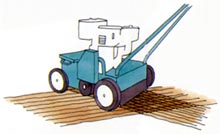 |
Overseeding Lawns suffering from thin, bare patches or those without any grass
at all require aggressive renovation techniques. The lawn may be revived by overseeding
with a Lawn Seeder.
The hopper drops a measured amount of seed and the Lawn
Seeder plants the seed by blending them into the soil through the action of the rotating
knife blades. As the Lawn Seeder moves forward, the neoprene flap smoothes the soil to
cover the seed and aid germination. |
| For best results, it is
recommended to overseed in two applications by cross cutting the first application at a
45� angle. Water thoroughly immediately after overseeding and lightly daily. Once the
seed has germinated and grass has sprouted, water regularly to encourage deeper root
growth. |
Return
to Landscaping Equipment
This
information is provided as a courtesy by Central Mass Party Rentals and
Equipment.
Please contact your sales person if you do not understand the use
or operation of any equipment rental.
|
Prices do not
include Tax or D.W.C. (damage waiver coverage)
|